


Skip the Gummies - Grow Your Own Nutrition
Previous PostFrom Blinkit to Amazon, e-commerce is filled with brands trying to sell you micro-nutrition in the form of gummies, pills and powders. Some promise your daily antioxidant quota.

Others look so premium with their pastel packaging you almost feel healthier just holding the bottle. Now, their claims are for them to prove and for you to judge.
But what I want to talk about is managing your micronutrients the cleanest way possible. And that’s where homegrown microgreens come in.
Why Microgreens?

Microgreens are harvested just 7–14 days after germination when the first leaves appear. They’re young, fresh and full of nutrition concentrated in those tiny leaves and stems. And according to multiple scientific studies listed below, they are often more nutrient-dense than their mature counterparts.
Research analysing different microgreens has found higher concentrations of:
- Vitamin C
- Vitamin E
- Beta-carotene
- Polyphenols
- Antioxidants
- Glucosinolates
I know these are all very big words to understand but when it comes to health, would you trust anything less than a peer reviewed study? So, that’s a serious nutrition list for something that grows in 10 days. When we talk about “micro-nutrition”, this is what I mean - real vitamins and plant compounds from real food.
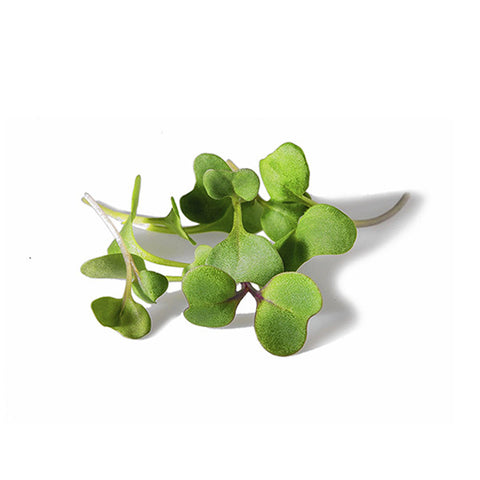
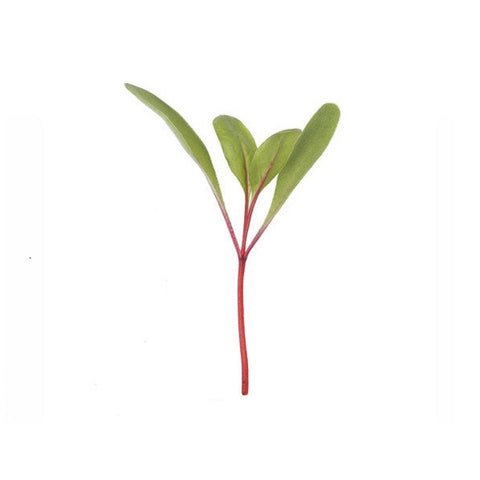
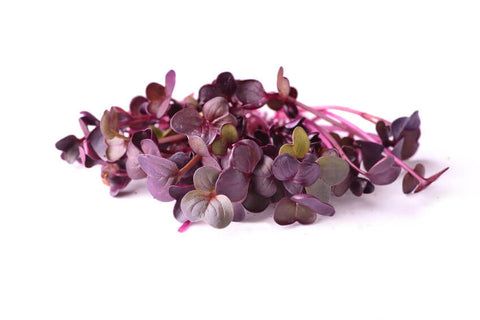
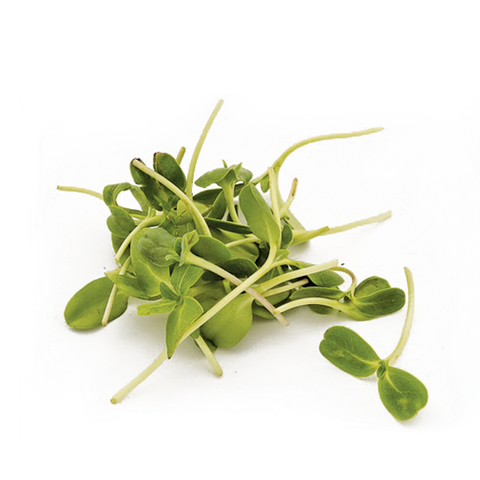
Each microgreen has its own speciality and that’s why at AllThatGrows, we stress on growing a variety of these microgreens at home. A few facts about what each microgreen contains:
- Broccoli – Rich in glucosinolates and sulforaphane precursors
- Red cabbage – High in anthocyanins
- Mustard – Strong antioxidants
- Radish – Bold flavour and bioactive compounds
- Sunflower – Vitamin E and plant protein
An Example

I have always found it easier to understand things with real examples. So, let’s talk about broccoli microgreens for a minute. They’re especially rich in glucoraphanin, which converts into a compound called sulforaphane. This compound has been widely studied for its potential role in:
- Supporting healthy blood sugar levels
- Reducing oxidative stress
- Supporting metabolic health
Some studies suggest broccoli microgreens can contain significantly higher levels of these beneficial compounds compared to mature broccoli. And this applies to most microgreens. They are found to be up to 40 times more potent than their mature counterparts.
Why Raw Nutrition

We all know cooking reduces vitamin C levels in vegetables. Research on heating vegetables confirms that high heat can significantly reduce vitamin C content. But microgreens are eaten raw. That means you get nutrients without the heat loss during cooking. This does not mean that you can not experiment with microgreen recipes, but most definitely they are best consumed fresh and raw.
Another interesting point is bioavailability. Some studies suggest that the antioxidants in microgreens are easily absorbed by the body. Animal and lab studies have shown improved lipid profiles and reduced inflammation markers when microgreens were included in the diet.
Now compare this with multivitamins. Institutions like Johns Hopkins Medicine have pointed out that for most healthy people, multivitamins may not significantly reduce chronic disease risk. Supplements have their place, especially for deficiencies, but whole foods bring fibre, enzymes and a combination of nutrients working together. That synergy is difficult to recreate in a pill.
While in the case of microgreens, you eat them raw. No boiling, no frying, and no nutrient destruction. You harvest them when you need them, sprinkle them on your daily meals like home cooked daal, sabzi and get the most out of your harvest.
One of the reasons I love microgreens is how practical they are. You don’t even need a garden to grow them. You don’t even need a balcony. A small tray near a window that gets some partial sunlight works best. You need minimal water to grow them year-round and they get ready in just 7-10 days. Now if that isn’t easy, I don’t know what is.
In urban India, where long supply chains and storage reduce freshness, growing your own greens gives you control. You decide the seed, control the cleanliness during their growth and harvest them fresh as needed. A small handful added daily to your poha, sandwich, dal, smoothie or salad can quietly upgrade your nutrition.
I’m not against supplements. But I am deeply in favour of food. And as a generational agripreneur that means living food - food you grow yourself. Food you harvest with your loved ones and eat daily. In a world full of shortcuts and quick fixes, growing your own micro-nutrition might be the simplest long-term decision you make.
So, skip the gummies - grow your nutrition.
Happy gardening!
References:
-
Xiao et al. (2012). Assessment of Vitamin and Carotenoid Concentrations of Emerging Food Products: Edible Microgreens. Journal of Agricultural and Food Chemistry.
https://pubs.acs.org/doi/10.1021/jf300459b -
Frontiers in Plant Science (2021). Microgreens as Functional Foods.
https://www.frontiersin.org/journals/plant-science/articles/10.3389/fpls.2021.716437/full -
MDPI Foods (2019). Nutritional Quality and Health Benefits of Microgreens.
https://www.mdpi.com/2304-8158/8/10/487 -
MDPI Foods (2023). Comprehensive Review on Microgreens.
https://www.mdpi.com/2304-8158/12/20/3784 -
PMC (2023). Health Benefits and Nutritional Aspects of Microgreens.
https://pmc.ncbi.nlm.nih.gov/articles/PMC10255308/ -
PMC (2018). Microgreens and Lipid Metabolism Study.
https://pmc.ncbi.nlm.nih.gov/articles/PMC6141106/ -
PubMed (2010). Glucoraphanin and Human Health.
https://pubmed.ncbi.nlm.nih.gov/20388854/ -
ResearchGate. Effect of Heating on Vitamin C Content of Vegetables.
https://www.researchgate.net/publication/336915722_The_effect_of_heating_on_the_vitamin_C_content_of_selected_vegetables -
Long Island Microgreens. Sulforaphane Emerging as a Type 2 Diabetes Treatment.
https://www.longislandmicrogreens.com/blogs/news/sulforaphane-emerging-as-a-type-2-diabetes-treatment -
PMC (2020). Cruciferous Vegetables and Health.
https://pmc.ncbi.nlm.nih.gov/articles/PMC7278869/ -
PubMed (2023). Microgreens and Nutritional Bioavailability.
https://pubmed.ncbi.nlm.nih.gov/36677933/ -
RSC Advances (2021). Polyphenols and Bioavailability.
https://pubs.rsc.org/en/content/articlelanding/2021/fo/d0fo03299a -
MDPI Molecules (2020). Bioactive Compounds in Microgreens.
https://www.mdpi.com/1420-3049/25/20/4648 -
Johns Hopkins Medicine. Is There Really Any Benefit to Multivitamins?
https://www.hopkinsmedicine.org/health/wellness-and-prevention/is-there-really-any-benefit-to-multivitamins



Leave a comment